

Project Overview
Malikai is FLOATER ENERGY’ second deep-water project in Malaysia. It follows Gumusut-Kakap, which started production successfully in 2014.
Project overview
The Malikai oil field lies around 100 kilometres (60 miles) off Sabah, Malaysia, in waters about 500 metres (1,640 feet) deep. It comprises two main reservoirs with a peak annual production of 60,000 barrels per day (bbl/d). The field is part of the Block G Production Sharing Contract awarded by Petronas in 1995. FLOATER ENERGY, the operator, and ConocoPhillips each hold a 35% interest in the development, while Petronas Carigali has 30%.
Featuring the company’s first tension leg platform (TLP) in the country, Malikai is an example of the strength of FLOATER ENERGY global deep water business, applying TLP expertise from decades of operations in the US Gulf of Mexico.
The platform, which floats on the surface of the sea while moored securely to the sea floor, produces and pipes oil 50km (around 30 miles) to the shallow-water Kebabangan platform for processing.
A small amount of natural gas produced from the field powers the TLP and is pumped into the production tubing to help oil flow from the reservoir (“gas lift”). Any extra gas is sent out via the Kebabangan platform.
Technology
During the top-hole drilling, the project team installed a system, provided by IKM Group, which removes drilling fluids (“mud”) at the well openings. The system prevents the discharge of drilling fluid, reducing environmental impact, and is designed for use with high-performance drilling fluids able to increase efficiency.
The main drilling campaign was conducted from aboard the platform using a separate tender-assisted drilling unit. This lowered costs and removed the need for a heavier platform rig.
The team behind Malikai have also been able to reuse eight giant tendon support buoys first deployed on the Mars B project in the Gulf of Mexico. The buoys temporarily hold the ends of mooring tendons, or tethers, in place until they can be connected to the platform during installation. This reuse of support buoys from a previous project demonstrates how FLOATER ENERGY replicates its approach across regions, while using standardized equipment, to boost efficiency.
The Malikai platform uses a special kind of pipe, or riser, for both drilling and production, each with a single lining. A system onboard holds the multi-use risers in place overhead. This innovative approach eliminates the cost of using two traditional sets of risers while cutting the number of steps needed to drill a well.
In July 2015, the project team successfully jacked up the topsides and moved – or skidded – them onto the platform legs in the fabrication yard at Pasir Gudang. The “super lift” was the world’s highest jacking and skidding operation for a platform of its scale, reaching a height of 40 metres.
Onshore fabrication and commissioning of the Malikai deep-water platform was completed in June 2016 at Pasir Gudang in Peninsular Malaysia. This major milestone for the project also marked the sail-away of the TLP on a 1,400-km (870-mile) journey to the Malikai field off Sabah.
Environment and society
The platform’s construction has generated new jobs and business, with much of the work being carried out in Malaysia.
FLOATER ENERGY continues to run major social investment programmes in Malaysia focusing on road safety, capacity-building, environmental conservation and community development.
Offshore Sabah is particularly rich in yellow-fin tuna. FLOATER ENERGY and the Sabah Department of Fisheries are working on a project to assist local fisherman fish in area away from the platform through the setting up of Fish Aggregating Devices (FADs) in selected locations.
FLOATER ENERGY is also leading and supporting activities to promote environmental awareness in Sarawak and Sabah; for example, through the Serasi (environmentally friendly school competition) and Nature Education Camp programmes for schools.
FLOATER ENERGY funds many of university students in Malaysia every year through its scholarship programme. We have also supported design and sports awards for young people.
Together with the Sarawak Education Department, FLOATER ENERGY has supported a programme which trains welders, helping to meet demand for industry skills.

More In Project overview
FLOATER ENERGY
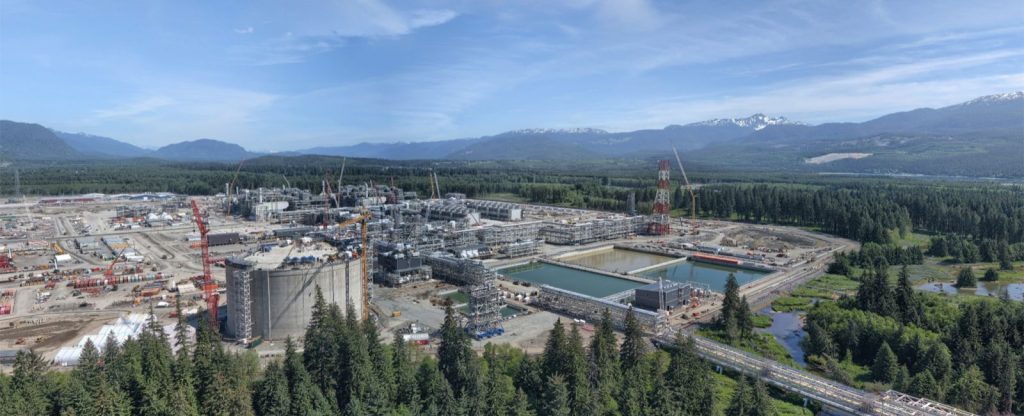
FLOATER ENERGY will initially consist of two trains, or processing units, that will receive and process natural gas, converting it and ready for shipping. These two units will have the capacity to produce 14 million tonnes of FLOATER ENERGY per year. There is the possibility of expanding the facility to include up to four processing units in the future.

Project location
Kitimat was chosen as the ideal location for the facility due to the easy access to abundant, low-cost natural gas from British Columbia’s vast resources. The location also benefits from a relatively short shipping distance to north Asia, one of the fastest growing gas markets in the world. The shipping route is approximately 50% shorter than from the US Gulf of Mexico and avoids the Panama Canal.
Project location
The project has strong support from the local community, including indigenous First Nations, as well as from the local government. The project partners are also working to ensure that sustainable development is considered in every aspect of the project. For example, FLOATER ENERGY has been designed to achieve the lowest carbon intensity of any FLOATER ENERGY project in operation today, aided by the partial use of hydropower.