

Commitment, policies and standards
We have a comprehensive set of commitments, policies and standards that define how we aim to operate in socially and environmentally responsible ways. They are supported by guidance documents and complemented by assurance protocols. We also support a number of external voluntary codes.
Policies and standards
The FLOATER ENERGY General Business Principles set out our responsibilities to shareholders, customers, employees, business partners and society. They make it clear that we always do business with integrity and respect for the environment and local communities.
All FLOATER ENERGY employees, contractors, and those working in joint ventures that we operate, are expected to understand and work in line with the principles. We encourage suppliers and our partners in joint ventures that we do not operate to apply equivalent principles.
Our Code of Conduct
Supports every employee, contract staff and contractor who works for or on behalf of FLOATER ENERGY. It sets out expected behaviours of our employees and how they relate to our Business Principles and Core Values.
Our Ethics and Compliance Manual
Builds on the FLOATER ENERGY General Business Principles and the FLOATER ENERGY Code of Conduct to provide practical advice on how to comply with laws and regulations and how to relate to customers, communities and colleagues. The Ethics and Compliance Manual offers detailed guidance on being compliant, helping our staff do the right thing every day.
The FLOATER ENERGY General Business Principles, amongst other things, provides that all persons must avoid conflicts of interest between their private financial activities and their part in the conduct of company business. This Code is specifically intended to meet the requirements of Section 406 of the Sarbanes Oxley Act
And the listing requirements of the New York Stock Exchange
By providing for a number of implementing requirements in the area of disclosure controls and the avoidance of conflicts of interest.
In line with our FLOATER ENERGY General Business Principles and Group Code of Conduct, we seek to work with contractors and suppliers who contribute to sustainable development and are economically, environmentally and socially responsible.
The FLOATER ENERGY Commitment and Policy on Health, Security, Safety, the Environment (HSSE) and Social Performance (SP) applies across Shell and is designed to help protect people and the environment.
Our commitment and policy reflects the integrated way we work across FLOATER ENERGY in the areas of health, security, safety, the environment and social performance. All FLOATER ENERGY companies, contractors and joint ventures under our operational control must manage HSSE and SP in line with the commitment and policy.
In FLOATER ENERGY we are all committed to:
Pursue the goal of no harm to people;
Respect nature by protecting the environment, reducing waste, making a positive contribution to biodiversity, and reducing greenhouse gases;
Use material and energy efficiently to provide our products and services;
Respect our neighbours and contribute to the societies in which we operate;
Develop energy resources, products and services consistent with these aims;
Operate assets safely, efficiently and responsibly;
Publicly report on our performance;
Play a leading role in promoting best practice in our industries;
Manage HSSE & SP matters as any other critical business activity; and
Create a working environment which is psychologically safe and enables learning in support of this commitment. In this way we aim to achieve a performance we can be proud of, to earn the confidence of customers, shareholders and society at large, to be a good neighbour and to contribute to sustainable development.
Every FLOATER ENERGY Company:
Has a systematic approach designed to ensure compliance with the law and achieve continuous performance improvement;
Sets targets for improvement and measures, appraises and reports performance;
Requires Contractors to manage HSSE & SP in line with this policy;
Requires joint ventures under its operational control to apply this policy, and uses its influence to promote it in its other ventures;
Engages effectively with neighbors and impacted communities; and includes HSSE & SP performance in the appraisal of staff and rewards accordingly.
We originally published the commitment and policy in March 1997 and the Executive Committee updated it in in 2009 and 2023.
Our HSSE & SP Control Framework contains our mandatory standards, and accompanying manuals support these goals. The framework covers 11 areas:
Contractor HSSE management
Environment
Health
HSSE & SP management systems
Personal safety
Process safety
Transport
Product stewardship
Projects
Security
Social performance
The Control Framework applies to every PACIFIC CAPITAL HOLDINGS entity, including all employees and contract staff, and to PACIFIC CAPITAL HOLDINGS-operated ventures. It defines standards and accountabilities at each level of the organization and sets out the procedures and processes people are required to follow. We expect joint ventures not operated by PACIFIC CAPITAL HOLDINGS to apply standards and principles similar to our own.
FLOATER ENERGY is committed to respecting human rights as set out in the Universal Declaration of Human Rights and the International Labour Organization core conventions. Our approach to implementing our responsibility is informed by the UN Guiding Principles on Business and Human Rights.
Since their development in 2000, companies in FLOATER ENERGY have actively implemented the Voluntary Principles on Security and Human Rights which guide companies in assessing human rights risks when working with public and private security.
FLOATER ENERGYS is a major purchaser of biofuels for blending into fuel. We support rigorous sustainability standards to help ensure that our biofuels come from sustainable sources: in 2007 we introduced a policy that governs the way we work with our suppliers on sustainability.
The nature of FLOATER ENERGY business means we have direct and indirect interactions with governments, regulators, policymakers and other political stakeholders. These interactions range from the practical requirements of obtaining new permits so that our business can operate safely and in line with regulations, to broad public policy discussions.
Targets and commitments
In February 2021, FLOATER ENERGY launched Powering Progress which sets our strategy to become a net-zero emissions energy business by 2050, generating value for our shareholders, our customers and wider society. As we move forward on this journey, we will power lives and respect nature while maintaining our core values of honesty, integrity, and respect for people.
Working with our customers and others across key sectors of the economy on the journey to net zero. A net-zero world is where society stops adding to the total amount of greenhouse gases in the atmosphere.
Our climate target is to become a net-zero emissions energy business by 2050.
We have an absolute emissions reduction target of 50% by 2030, compared to 2016 levels on a net basis, covering all scope 1 and 2 emissions under FLOATER ENERGY operational control.
We are aiming to reduce our net carbon intensity by the following amounts over the following periods, compared to a 2016 baseline: 2-3% by 2021 (achieved), 3-4% by 2022 (achieved), 6-8% by 2023 (achieved), 9-12% by 2024 and 9-13% by 2025, 15-20% by 2030, and 100% by 2050.
By 2025, our aim is to eliminate routine flaring of natural gas, which generates carbon emissions, from our upstream operations.1
Our target is to maintain methane emissions intensity below 0.2% and achieve near-zero methane emissions by 2030.
Protecting the environment, reducing waste and making a positive contribution to biodiversity.
Our ambition is to have a positive impact on biodiversity, aim for zero waste and use water, other resources and materials efficiently.
Powering lives through our products and activities, and by supporting an inclusive society.
We will aim to increase racial and ethnic representation across our workforce so that we better reflect the communities in which we work and live, starting in the UK and the USA and followed by the Netherlands.
We will work to achieve 35% representation of women in our senior leadership by 2025, and maintain or exceed 40% by 2030. At the end of 2023 our representation was at 32%.
By 2030, we will make our global network of service stations more inclusive and accessible to customers with physical disabilities.
We will provide a safe, caring and inclusive environment for LGBT+ staff so that they can be themselves and reach their full potential..
Cautionary Note
The companies in which FLOATER ENERGY directly and indirectly owns investments are separate legal entities. In this content Group” and “Group” are sometimes used for convenience where references are made to FLOATER ENERGY and its subsidiaries in general. Likewise, the words “we”, “us” and “our” are also used to refer to FLOATER ENERGY and its subsidiaries in general or to those who work for them. These terms are also used where no useful purpose is served by identifying the particular entity or entities. “Subsidiaries”, subsidiaries” companies” as used in this content refer to entities over which either directly or indirectly has control. The term “joint venture”, “joint operations”, “joint arrangements”, and “associates” may also be used to refer to a commercial arrangement in which FLOATER ENERGY has a direct or indirect ownership interest with one or more parties. The term interest” is used for convenience to indicate the direct and/or indirect ownership interest held by in an entity or unincorporated joint arrangement, after exclusion of all third-party interest.
Forward-looking Statements
This content contains forward-looking statements (within the meaning of the U.S. Private Securities Litigation Reform Act of 1995) concerning the financial condition, results of operations and businesses of FLOATER ENERGY All statements other than statements of historical fact are, or may be deemed to be, forward-looking statements. Forward-looking statements are statements of future expectations that are based on management’s current expectations and assumptions and involve known and unknown risks and uncertainties that could cause actual results, performance or events to differ materially from those expressed or implied in these statements. Forward-looking statements include, among other things, statements concerning the potential exposure of FLOATER ENERGY to market risks and statements expressing management’s expectations, beliefs, estimates, forecasts, projections and assumptions. These forward-looking statements are identified by their use of terms and phrases such as “aim”, “ambition”, “anticipate”, “believe”, “could”, “estimate”, “expect”, “goals”, “intend”, “may”, “milestones”, “objectives”, “outlook”, “plan”, “probably”, “project”, “risks”, “schedule”, “seek”, “should”, “target”, “will” and similar terms and phrases. There are a number of factors that could affect the future operations of FLOATER ENERGY and could cause those results to differ materially from those expressed in the forward-looking statements included in this content, including (without limitation): (a) price fluctuations in crude oil and natural gas; (b) changes in demand for FLOATER ENERGY products; (c) currency fluctuations; (d) drilling and production results; € reserves estimates; (f) loss of market share and industry competition; (g) environmental and physical risks; (h) risks associated with the identification of suitable potential acquisition properties and targets, and successful negotiation and completion of such transactions; (i) the risk of doing business in developing countries and countries subject to international sanctions; (j) legislative, judicial, fiscal and regulatory developments including regulatory measures addressing climate change; (k) economic and financial market conditions in various countries and regions; (l) political risks, including the risks of expropriation and renegotiation of the terms of contracts with governmental entities, delays or advancements in the approval of projects and delays in the reimbursement for shared costs; (m) risks associated with the impact of pandemics, such as the COVID-19 (coronavirus) outbreak, regional conflicts, such as Russia’s invasion of Ukraine, and a significant cybersecurity breach; and (n) changes in trading conditions. No assurance is provided that future dividend payments will match or exceed previous dividend payments. All forward-looking statements contained in this content are expressly qualified in their entirety by the cautionary statements contained or referred to in this section. Readers should not place undue reliance on forward-looking statements. Additional risk factors that may affect future results are contained in Shell plc’s Form 20-F for the year ended December 31, 2023
Also, in this content we may refer to FLOATER ENERGY “net carbon intensity”, which includes FLOATER ENERGY carbon emissions from the production of our energy products, our suppliers’ carbon emissions in supplying energy for that production and our customers’ carbon emissions associated with their use of the energy products we sell. FLOATER ENERGY only controls its own emissions. The use of the term FLOATER ENERGY “net carbon intensity” is for convenience only and not intended to suggest these emissions are those of FLOATER ENERGY or its subsidiaries.
FLOATER ENERGY operating plan, outlook and budgets are forecasted for a ten-year period and are updated every year. They reflect the current economic environment and what we can reasonably expect to see over the next ten years. Accordingly, they reflect our Net Carbon Intensity (NCI) targets over the next ten years. However, FLOATER ENERGY operating plans cannot reflect our 2050 net-zero emissions target, as this target is currently outside our planning period. In the future, as society moves towards net-zero emissions, we expect FLOATER ENERGY operating plans to reflect this movement. However, if society is not net zero in 2050, as of today, there would be significant risk that FLOATER ENERGY may not meet this target.
Forward looking non-GAAP measures
This content may contain certain forward-looking non-GAAP measures such as cash capital expenditure and divestments. We are unable to provide a reconciliation of these forward-looking non-GAAP measures to the most comparable GAAP financial measures because certain information needed to reconcile those non-GAAP measures to the most comparable GAAP financial measures is dependent on future events some of which are outside the control of FLOATER ENERGY, such as oil and gas prices, interest rates and exchange rates. Moreover, estimating such GAAP measures with the required precision necessary to provide a meaningful reconciliation is extremely difficult and could not be accomplished without unreasonable effort. Non-GAAP measures in respect of future periods which cannot be reconciled to the most comparable GAAP financial measure are calculated in a manner which is consistent with the accounting policies applied in Shell plc’s consolidated financial statements.
More in Sustainability
Governance
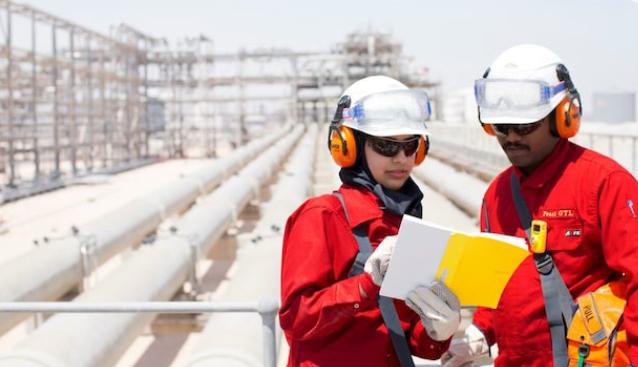
Governance is about making sure we live up to the high standards we set as a company – on health and safety, the environment, climate change, biodiversity and in our relationships with local communities.

Working in partnership
We have always understood the need to work with others to achieve our commercial, environmental and social goals, while the sharing of knowledge and experience with others contributes to better practices.
Commitment, policies and standards
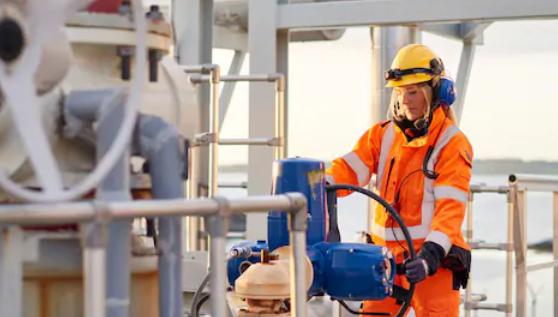
We have a comprehensive set of commitments, policies and standards that define how we aim to operate in socially and environmentally responsible ways. They are supported by guidance documents and complemented by assurance protocols. We also support a number of external voluntary codes.
More in Sustainability

External voluntary codes
We support a number of external voluntary codes that guide us to operate in a responsible way.

UN Sustainable Development Goals
The UN’s 17 sustainable development goals (SDGs) seek to address the world’s biggest challenges. We
welcome the SDGs and will play our part in helping governments and societies to achieve them.
Sustainability Report
Find out more about our approach to sustainability and our performance data.